The DFW lawn decision is not just about looks
In Tarrant and Collin Counties, the choice is not just about a green look. It is about intense sun, foot traffic, maintenance, and how you use the yard. Natural grass can be the right fit, but it is not hands-off. Artificial turf removes the mowing and routine lawn-irrigation cycle, but heat, drainage, pets, and sun exposure still matter.
Most local natural lawns are Bermuda or St. Augustine. Both are warm-season grasses, but they solve different problems. Bermuda is durable, heat- and drought-tolerant for open sun. St. Augustine offers better relative shade tolerance, with regular-care, disease, chinch-bug, and traffic considerations.
I’m Nick. Before I recommend turf, I want to see the site and hear how you use it. Quality. Premium. No shortcuts. That means being straight about the tradeoffs—not selling the same answer to every yard.
Water: a different kind of responsibility
Natural grass needs water to stay actively growing and presentable through hot, dry periods. The right timing and amount depend on rainfall, soil, slope, shade, variety, and irrigation coverage. Texas A&M says Bermuda can survive on natural rainfall where irrigation is unavailable, but it performs better with appropriate supplemental water; drought-stressed warm-season grass may wilt, brown, or go dormant. St. Augustine also has drought tolerance, not zero water needs.
For local context, Water Is Awesome—created by Dallas Water Utilities, North Texas Municipal Water District, and Tarrant Regional Water District—advises watering only as needed, up to twice weekly in summer, and skipping it when rain is expected. This is not a substitute for your city’s current rules, which can change by municipality and drought stage.
Artificial turf needs no irrigation for growth, but it does not mean “never use water.” Owners may rinse dust, spills, or pet areas and temporarily cool a sun-warmed surface. Do not decide from a made-up water-bill number: utility rates, lot size, habits, and irrigation efficiency vary across DFW. Use your actual irrigation records and the area you intend to replace.
Mowing and seasonal lawn care: the recurring work natural grass requires
Bermuda is tough, but it asks for regular mowing. Texas A&M recommends a 1- to 2-inch home-lawn height and says mowing is often weekly during the growing season. Its listed weaknesses include poor shade tolerance, frequent mowing, and moderate-to-high fertilization needs. It can be a practical living lawn for a sunny, active yard if you can keep up with it.
Texas A&M lists a 2.5- to 3.5-inch mowing height and weekly rotary mowing for St. Augustine. Its relative shade tolerance can work in filtered light, but mowing is only one cost. Fertility, weeds, insects, disease pressure, irrigation adjustments, equipment, and repair are part of owning either natural lawn.
Artificial turf removes mowing, fertilizing for growth, and the usual grass-weeding routine. It still needs debris removal, edge care, and product-specific maintenance. Pet areas need solid-waste pickup and prompt cleaning.
Heat and sun: the tradeoff buyers should hear before they choose
North Texas heat is where honest advice matters most. Artificial turf can become uncomfortably hot in direct sun; it is not a cooling surface on a summer afternoon. Its temperature depends on product, color, exposure, surroundings, wind, and time of day, so a single temperature claim is not useful.
An actively growing natural lawn releases water vapor through transpiration, part of the cooling effect Texas A&M describes around homes. That benefit requires a living, adequately watered lawn; drought stress can bring dormancy or lost color.
For a full-sun play area, plan for shade, afternoon sun, adjacent hardscape, and when the space is used. If bare feet, pets, or children will use turf in the hottest part of the day, test the surface first. Decide around the toughest hour of the year—not the 9 a.m. photo.
Long-run cost: compare ownership, not a single price tag
Emerald Green Turf’s typical installed range is $8–$14 per square foot for residential lawn turf. It is a starting range, not a universal quote: access, removal, drainage, layout, base work, edges, and material change the scope. Putting greens are quoted separately after an onsite walk because their design and performance needs differ.
Natural grass often has a lower reset cost when the lawn and irrigation are workable, but its recurring costs can include water, mowing or service, fertilizer, treatments, equipment, irrigation repair, and sod or bare-spot repair. Turf concentrates more expense at installation and usually has fewer routine lawn-care categories, but it still needs care and eventually replacement. Compare your actual maintenance spending and the problem you need to solve—not a generic payback promise.
A typical residential turf project takes 2–3 days once scheduled and site conditions are ready. Product selections include a 10–15 year manufacturer warranty, registered for the owner. Review the selected manufacturer’s written terms with your quote.
How Bermuda, St. Augustine, and artificial turf stack up
| Consideration | Bermuda | St. Augustine | Artificial turf |
|---|---|---|---|
| Sun and shade | Strong choice for open sun; not well suited to moderate or dense shade | Better relative shade tolerance among these warm-season grasses | Does not rely on sun to grow, but direct sun can make the surface hot |
| Water | Drought tolerant, but active growth and appearance may need supplemental irrigation | Drought tolerant with deep-rooting potential; living-lawn care still applies | No irrigation for growth; rinsing may be used for cleaning or temporary cooling |
| Mowing | Often weekly in growing season; 1–2 inches for home lawns | Weekly rotary mowing; 2.5–3.5 inches | No mowing |
| Traffic and recovery | Durable with strong recovery potential | Lower traffic tolerance is a listed weakness | Does not grow or self-repair; design and installation must match use |
| Ongoing care | Mowing, irrigation management, fertility, weeds, and repairs | Mowing, irrigation management, fertility, pest/disease attention, and repairs | Cleanup, debris removal, pet-area care where applicable, and product-specific maintenance |
This table is a planning tool, not a substitute for seeing the site. The most important variable is usually where the problem is: heavy traffic, shade, standing water, an unused front lawn, a dog run, or a backyard built for entertaining.
Design the yard as a system, not a single surface
A DFW backyard does not have to be all turf or all grass. Turf can solve a high-traffic or hard-to-mow zone. Pavers can create a patio, path, grilling area, or transition that keeps traffic off the lawn. Beds and shade can reduce the area needing either mowing or turf care.
For dogs, consider a purpose-built pet turf plan that accounts for traffic, cleaning access, and drainage. A putting green needs a separate onsite conversation about size, breaks, fringe, cups, and roll. Replacing grass also does not erase a drainage issue: we assess existing grade and project conditions before recommending a layout.
A practical way to decide for your Tarrant or Collin County home
Choose natural grass when you want a living lawn and can manage seasonal mowing, watering, and lawn care. Bermuda generally fits open, active, sunny ground; St. Augustine can make sense where shade tolerance is the priority, with its care and traffic limits.
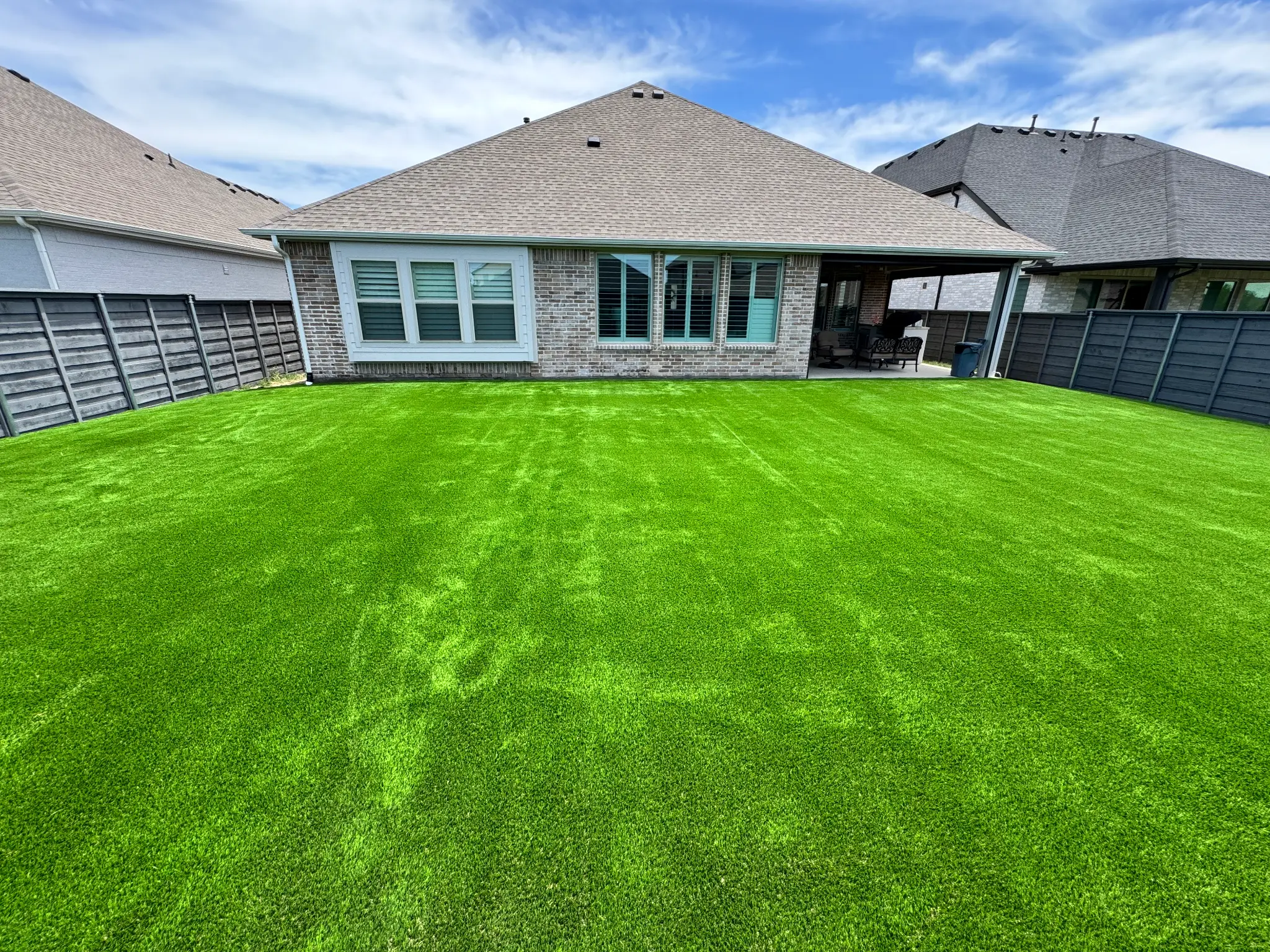
Consider artificial turf for a consistent finished look without mowing, a defined-use area, or less dependence on routine irrigation. It is worth considering for small lawns, side yards, repeated traffic lanes, pet zones, and places grass repeatedly fails. Do not choose it for unshaded midday bare-foot use without a heat plan.
Check HOA requirements and local rules for your address before installation. Then schedule an onsite walk. Emerald Green Turf, LLC is a family-run, insured DFW installer headquartered in Fort Worth and serving the Dallas-Fort Worth metroplex. Call Nick at (661) 733-7009 or email emgturf@gmail.com. Daily, 7 AM–5 PM.
Related internal links
- Artificial Turf Services
- Pet Turf
- Putting Greens
- Pavers
- Fort Worth Artificial Turf Cost Guide
- Contact Emerald Green Turf
Sources
- Texas A&M AgriLife Extension, Bermudagrass Home Lawn Management Calendar — Bermuda strengths, limitations, mowing, irrigation, and drought-stress context.
- Texas A&M AgriLife Extension, St. Augustinegrass — St. Augustine strengths, limitations, mowing height, and mowing frequency.
- Water Is Awesome, Outdoor Water-Saving Tips — regional North Texas water-conservation guidance and program partners.
- Collin County, Best Management Practices / Standard Operations Manual (PDF) — County document listing Bermudagrass among drought-tolerant grasses used to reduce maintenance.
Company-provided operating specifications in this page: Emerald Green Turf’s residential lawn-turf installed range, typical residential project timeline, manufacturer-warranty wording, service area, insurance status, and contact details.
Frequently asked questions
Q: Is artificial turf better than Bermuda in DFW?
A: It is better for homeowners who want no mowing and a consistent defined-use surface. Bermuda remains a strong natural-grass option for sunny, active yards because Texas A&M identifies drought tolerance, heat tolerance, durability, and recovery potential. The right choice depends on sun, traffic, heat expectations, and whether you want a living lawn.
Q: Is St. Augustine or artificial turf better in a shady yard?
A: St. Augustine has stronger relative shade tolerance than Bermuda, but it still needs mowing, watering, and pest/disease attention. Turf does not need sunlight to grow, but trees create cleanup needs and the site still needs a drainage plan. An onsite look at the shade pattern is the right next step.
Q: Does artificial turf use no water?
A: It uses no water for growth, so it does not have a living lawn’s routine irrigation requirement. It may still be rinsed for cleanup, pet-area care, or short-term surface cooling. Actual use depends on maintenance habits.
Q: Will artificial turf be too hot for my kids or dogs?
A: Direct sun can make turf uncomfortably hot. Consider shade, time of use, and the hottest part of the day before selecting it for bare feet or pet activity. Test the surface; do not decide from a catalog photo.
Q: What does residential artificial turf cost from Emerald Green Turf?
A: Residential lawn turf typically runs $8–$14 per square foot installed. Final scope depends on the site, access, layout, preparation, and material. Putting greens are quoted separately after an onsite walk.
Q: How long does a residential turf installation take?
A: A typical residential project takes 2–3 days once scheduled and when site conditions are ready. Larger or more complex sites can require a different schedule.
Q: Is there a warranty on turf?
A: Product selections include a 10–15 year manufacturer warranty, registered for the owner. Specific coverage and terms depend on the selected manufacturer and product; review the written warranty with your quote.