A Putting Green Needs Its Own Quote
A putting green is not lawn turf with a flag dropped into it. It is a purpose-built practice surface, and the design work below, on, and around the green determines the finished project.
For comparison only, our installed residential lawn turf projects generally fall in the $8–$14 per square foot range. That is not a putting-green rate and should not be used to estimate one. A custom green can involve a different surface, base preparation, shaping, cup work, edging, fringe, and connections to the rest of the yard. Two greens with the same square footage can have very different scopes.
Nick walks the property before we price the work. We look at the available space, backyard access, existing surfaces, grade, the way you plan to use the green, and the details you want around it. Then we prepare a written quote for that project. No generic putting-green price before we see the job.
Emerald Green Turf is a family-run turf installer headquartered in Fort Worth and serving the Dallas-Fort Worth metroplex. Our standard is direct: Quality. Premium. No shortcuts. If a layout needs more preparation or design to meet the plan, we explain that in the scope instead of burying it in a vague allowance.
Typical Backyard and Tournament-Style Sizes
Size is a helpful starting point, but it is only one part of the estimate. A typical backyard practice green is often 300–500 square feet. That range can provide several targets and short-putt work. A smaller green can still make sense when it is designed around the putts you actually want to practice.
A larger, tournament-style green is commonly 800–1,400 square feet. That scale can support a broader layout, more room between targets, longer lines, a fuller fringe, and more options for surrounding practice areas. It also generally adds more material, site preparation, fitting, edging, and installation work.
Neither range is a rule or a price category. The right footprint comes from the yard and the experience you want. A 350-square-foot green with well-considered target locations may be more useful than a larger surface with no clear practice purpose. A homeowner planning for varied putts, family use, or chipping may want to design the green and its surrounding area as one connected feature.
Before the site visit, think about how people will move through the space. Where will you stand when you chip? Do you want an open route from the patio? Will the green be a quiet practice area, a gathering feature, or both? Those answers help shape the design before we discuss a final scope.
What Moves the Cost of a Putting Green
Putting-green cost is driven by the actual design and site conditions, not only the number of square feet. During an onsite walk, we review the elements that affect the finished installation:
- Footprint and shape: A larger area generally requires more material and preparation. Curves, narrow areas, cutouts, and irregular edges can require more layout and fitting than a simple shape.
- Access and existing conditions: The route into the backyard affects how equipment and materials are handled. Existing sod, gravel, hardscape, roots, or other surfaces may need removal or a different plan.
- Base preparation: A stable, prepared base supports the finished surface. The existing ground and the planned contour help determine the work required below the turf.
- Selected surfaces: The putting surface and any fringe serve different functions. Material choice and the amount of each are part of the project-specific scope.
- Perimeter details: Pavers, stepping stones, landscape beds, drains, fences, patios, and lawn-turf areas all affect how the edge is planned and finished.
A useful quote describes the agreed scope. That gives you a better way to compare proposals than a blanket square-foot figure that leaves the important work undefined.
Contour, Cups, and Fringe: The Custom Drivers
Three details have an outsized effect on the design and quote: contour, cup layout, and fringe.
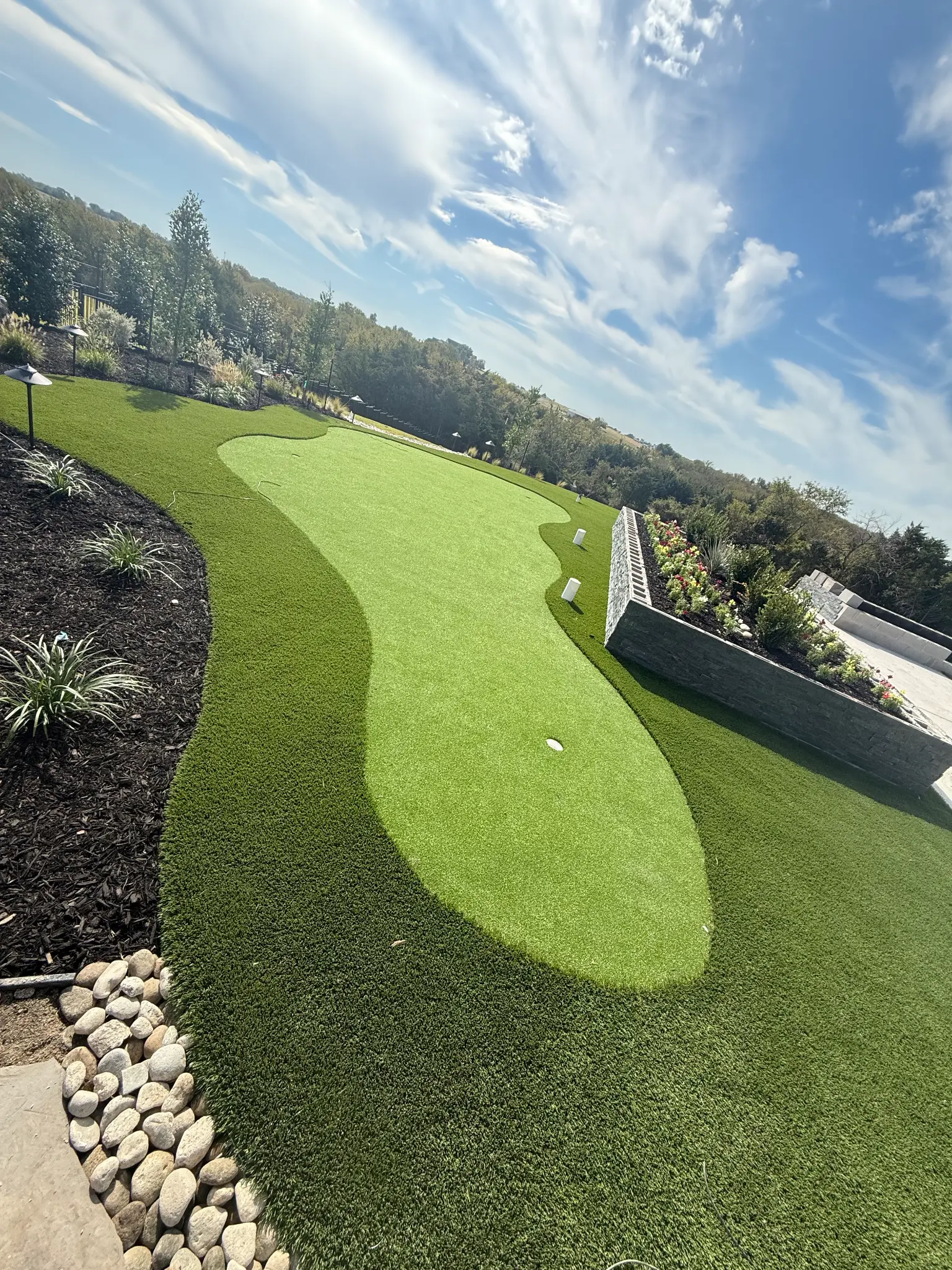
Contour is what separates a flat decorative surface from a green designed for varied putts. A flat green may be the right choice for simple short-putt practice. Intentional slopes and elevation changes can create different lines and pace, but they need to be planned with the footprint, surrounding grade, and usable areas in mind. More contour can change the scope because it changes the preparation and finishing work below the surface. Not every yard needs dramatic movement; the right amount depends on the space and the practice you want.
Cup count and placement also need to be designed—not added at the end. Multiple locations can make practice less repetitive and give different targets when friends or family use the green. The cups have to work with the available room, planned breaks, and intended paths of play. More cups are not automatically better. A focused smaller green may call for a simpler layout, while a larger tournament-style green may have room for more spread-out targets.
Fringe can make the green feel more complete, provide a transition around the edge, and create a zone for approach or chipping practice. It also changes the project because its material, width, shape, and connection to the putting surface must be accounted for. Some homeowners want a narrow, defined fringe; others want a broader practice area or a clean transition into lawn turf. We price the selected design rather than assuming every green gets the same border.
Build the Green Into the Whole Backyard
The best green usually works with the rest of the property instead of sitting apart from it. A surrounding area of artificial turf can help the practice zone blend into a low-maintenance lawn. Pavers and patios can provide a deliberate route from an outdoor living area to the green. The edge where these materials meet is part of the installation plan, not an afterthought.
If dogs use the backyard, mention that early. A green and a high-traffic dog area may need separate zones to keep the yard functional for everyone. Our pet turf guide explains the questions homeowners should consider, and we can discuss whether a dedicated pet area, lawn-turf zone, or hardscape route makes sense around the green.
A connected plan also makes decisions easier. For example, a patio may determine the best access point; the access point can influence the green’s edge; that edge may determine whether a fringe is useful. Looking at the entire space before installation helps avoid an attractive feature that is awkward to use or maintain around.
What We Review at the Onsite Walk
The onsite walk replaces assumptions with a real plan. Nick measures the space, reviews access and existing conditions, and discusses the practice features that matter to you. Reference photos are welcome when they help show the style you have in mind, but the quote is based on the actual property and selected scope.
We will normally discuss the proposed footprint and shape; how you expect to use the green; flat versus contoured areas; cup locations; fringe or chipping space; existing-surface removal; access; and the materials or features that meet the green at its edge.
Afterward, Emerald Green Turf provides a written, project-specific quote. Nick answers directly—no commission salesperson and no pressure to add a feature you do not want. If you are comparing a broader lawn-turf conversion, our DFW artificial turf cost guide covers lawn-turf cost factors separately. Its $8–$14 installed range applies to residential lawn turf, not putting greens.
A typical residential lawn-turf installation is generally completed in 2–3 days. A putting-green schedule depends on the final size, contouring, access, and surrounding work. We confirm the project timeline after the onsite walk instead of giving a generic schedule that may not fit the design.
Materials, Warranty, and a Clear Conversation
A putting green is an investment in how you use the backyard. For one homeowner, that means regular practice steps from the door. For another, it is a focal point for family and friends. The lowest number on a proposal is not the whole decision. Ask what is included, how the base and edges are planned, what surfaces are selected, and how the layout is intended to function.
Emerald Green Turf is insured. For eligible turf products, the manufacturer warranty is 10–15 years and registered for the owner. Exact coverage depends on the selected product and the manufacturer’s terms. We will identify the applicable information for your project rather than promise coverage that does not match the material selected.
Ready to discuss the space? Call (661) 733-7009, email emgturf@gmail.com, or request a quote. We are available daily from 7 AM–5 PM and serve homeowners throughout the Dallas-Fort Worth metroplex from our Fort Worth base.
Related Pages
- Artificial Turf Installation — lawn-turf scope, design options, and installation planning.
- Custom Putting Greens — Emerald Green Turf’s putting-green service overview.
- Pet Turf in Texas — considerations for dog-friendly areas near a green.
- Pavers & Patios — paths, patios, and hardscape connections around the green.
- DFW Artificial Turf Cost Guide — lawn-turf cost drivers; putting greens are quoted separately.
- Contact Emerald Green Turf — schedule an onsite walk and project-specific quote.
Sources
No third-party local, legal, pricing, or performance claims were used in this draft. The size ranges and operating details are company-provided specifications from the project brief; putting-green pricing is intentionally reserved for an onsite, project-specific quote.
Frequently Asked Questions
Q: What does a backyard putting green cost in DFW?
A: Emerald Green Turf prices every putting green separately after an onsite walk. Size, shape, base preparation, access, contour, cup layout, fringe, and adjoining features all affect the quote. We do not use a fixed putting-green square-foot rate because those details vary by project.
Q: Is the $8–$14 per square foot range for a putting green?
A: No. That installed range is for residential lawn turf only. A putting green has specialized design and construction requirements, so it is quoted separately after we review the site and selected scope.
Q: What is a typical size for a backyard putting green?
A: A typical backyard practice green is about 300–500 square feet. A larger tournament-style green is commonly 800–1,400 square feet. The right size depends on the yard, the putts you want to practice, and whether you want a fringe or chipping area.
Q: Why do contours affect a putting-green quote?
A: Contours change the planning and preparation required beneath the surface. Slopes, breaks, and elevation transitions need to work with the footprint, cup locations, and surrounding yard. We review those choices onsite and include the agreed design in the quote.
Q: Can I include multiple cups and a fringe?
A: Yes. Multiple cup locations and a fringe can be included when the layout has room for them and they fit how you plan to use the green. Cup placement, fringe material, and its connection to the putting surface are part of the custom design.
Q: How long will the installation take?
A: A typical residential lawn-turf project is generally 2–3 days. Putting-green timing depends on final size, contouring, access, and surrounding work, so we confirm the schedule after the onsite walk.
Q: Does the turf come with a warranty?
A: Eligible turf products carry a 10–15 year manufacturer warranty, registered for the owner. Coverage depends on the selected product and the manufacturer’s terms; we will review the applicable information for your project.
Q: How do I get an exact putting-green quote?
A: Call Emerald Green Turf at (661) 733-7009, email emgturf@gmail.com, or use the contact page to request an onsite walk. Nick reviews the property and discusses the footprint, contours, cups, fringe, access, and surrounding features before preparing the quote.