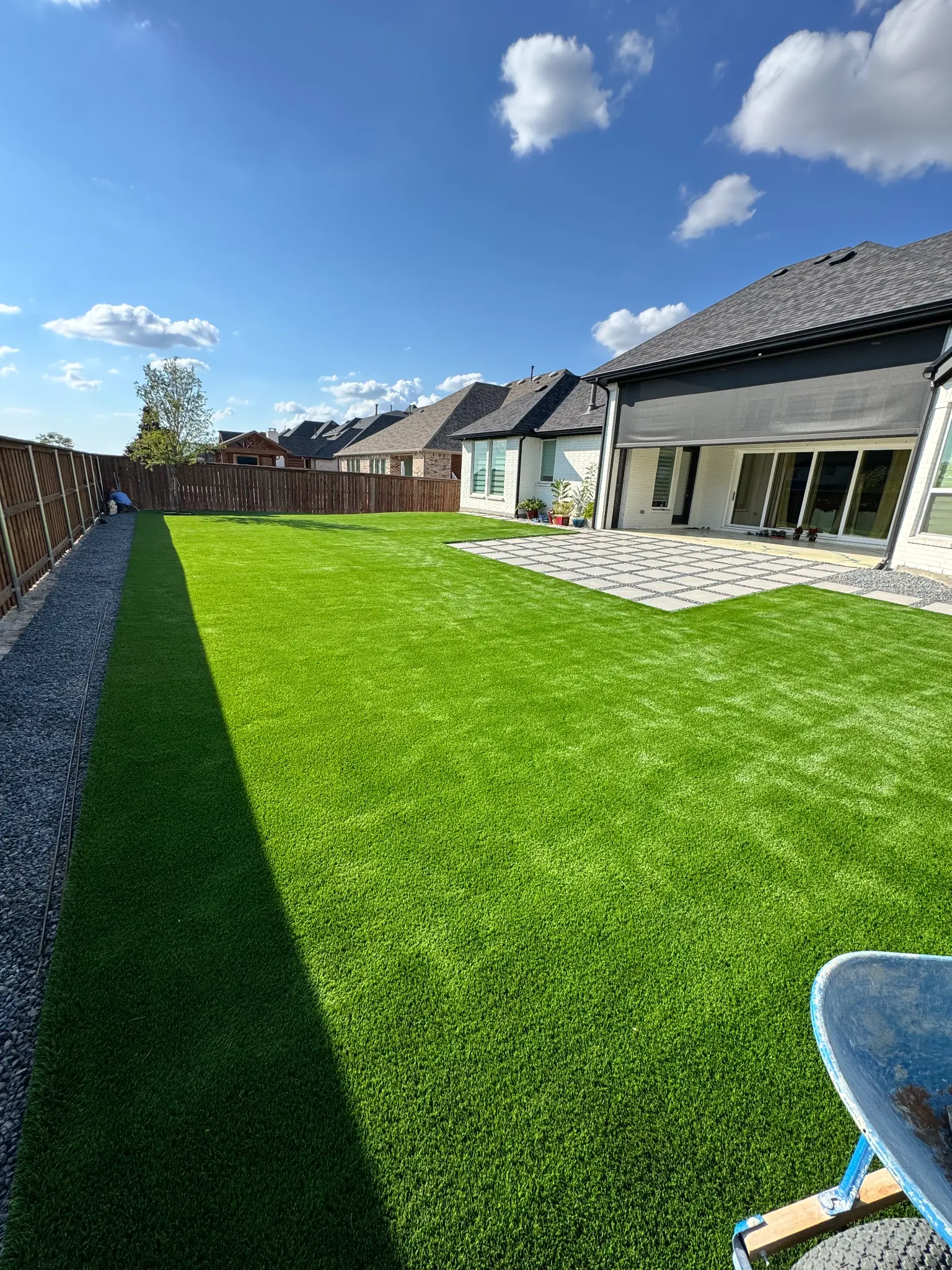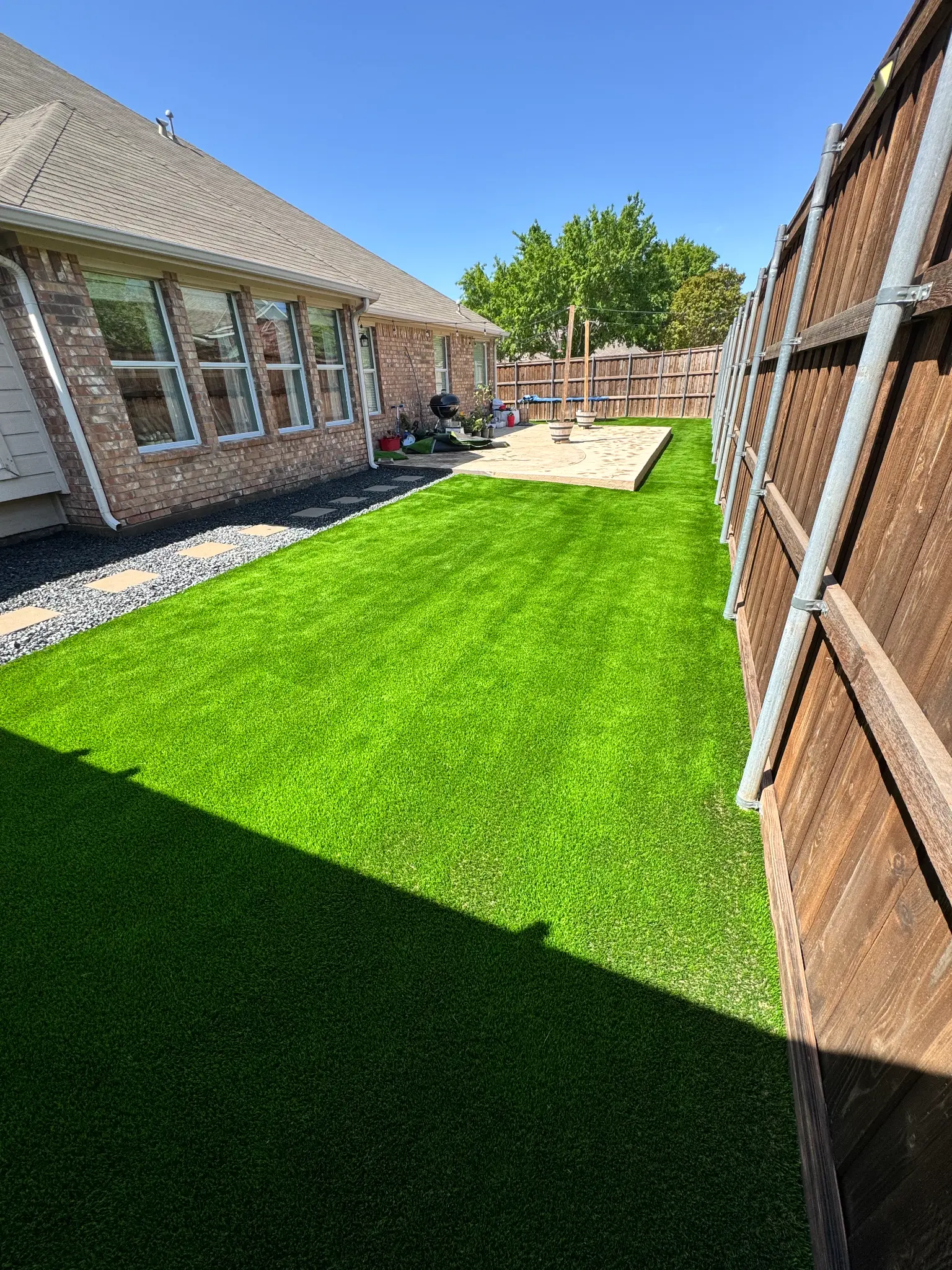
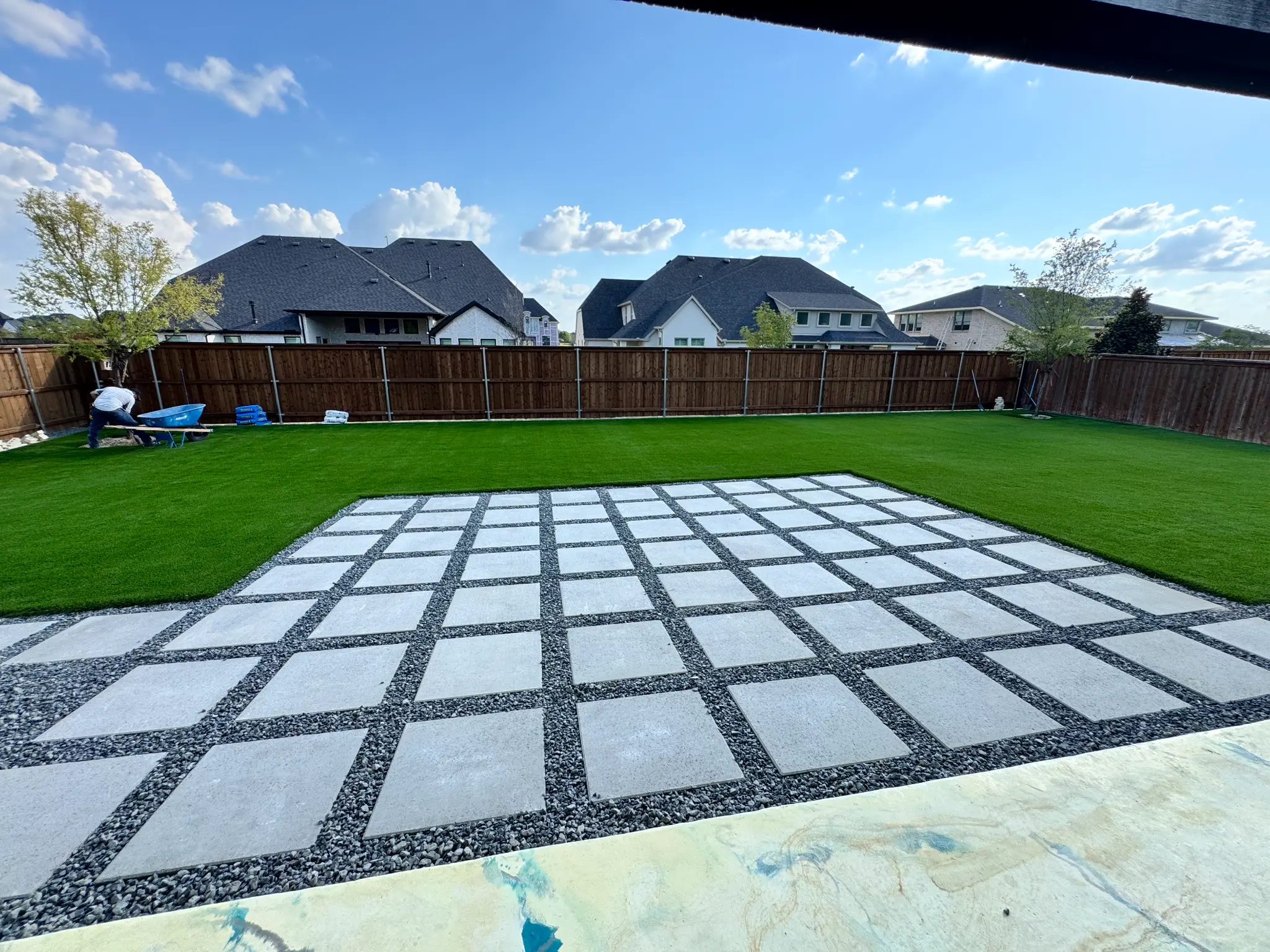
The honest comparison
| Material | Relative cost | Movement and repair | Design character | Best for |
|---|---|---|---|---|
| Pavers | Often higher detail and labor | Individual units may be reset or replaced; base and edges still matter | Patterned, modular surface | Patios, driveways, entries, design statements |
| Poured concrete | Often efficient for continuous areas | Cracking can occur; repair appearance and method vary | Continuous slab with selectable finish | Large continuous slabs, walkways, utility surfaces |
| Stepping stones | Scales with material, count, and setting | Individual stones may be reset; support and edge conditions matter | Open path or accent rhythm | Path between zones, accent across turf, side-yard access |
When pavers are the right answer
Pavers can suit dining patios, entries, paths, pool transitions, and other areas where modular pattern and repair access matter. Material, loading, excavation, base, bedding, edges, joints, grade, and drainage should fit the project. Do not assume one base depth or joint material applies to every pedestrian, pool, or vehicle area.
When poured concrete wins
Concrete can suit continuous patios, walks, landings, equipment pads, and other uses when the slab is specified for the load and site. Concrete can crack; subgrade, base, reinforcement, joints, geometry, moisture, and curing manage risk rather than eliminate it. Structural or permitted uses may require separate qualified design and approval.
Where stepping stones earn their place
Stepping stones often work as connectors through turf, gravel, mulch, or planting rather than as one continuous surface. Stride, stable support, elevation, wet-foot use, accessibility needs, drainage, and transitions determine whether the format is practical. Repair scope depends on the stone, setting, surrounding material, and cause of movement.
The combination plays
Some yards combine two materials so each serves a specific use. Examples to discuss during design include:
- Paver dining patio + concrete utility path along the side of the house. Pavers get the eyes, concrete saves the budget.
- Concrete pool surround + stepping stones across a turf zone. Concrete handles the wet, stones handle the soft transition.
- Pavers around the back door + stepping stones connecting to a putting green. Defined hardscape near the house, organic flow into the play zone.
Maintenance reality
Maintenance varies with material, finish, joints, sealer, trees, traffic, stains, drainage, and installation. Paver joints may need attention; concrete may need cleaning or project-specific sealing; stepping stones may need resetting if support changes. Follow manufacturer and installer guidance rather than one fixed calendar.
Texas-specific concerns
Clay soil movement
Expansive clay changes with moisture and can contribute to movement. Subgrade preparation, base, reinforcement where specified, joints, edges, drainage, and load planning manage risk but cannot guarantee that a surface never moves or cracks.
Freeze-thaw cycles
North Texas can experience freezing weather. Material specifications, drainage, joints, base, curing, sealing, and manufacturer instructions should account for the project conditions. Ask what is proposed and why instead of relying on a universal cycle count or mix rule from a marketing article.
Talk through your project with us
Emerald Green Turf installs pavers, concrete, and stepping stones and can coordinate them with artificial turf. A free onsite review helps compare use, load, access, drainage, material, transitions, and budget before the scope is written. Call (661) 733-7009.