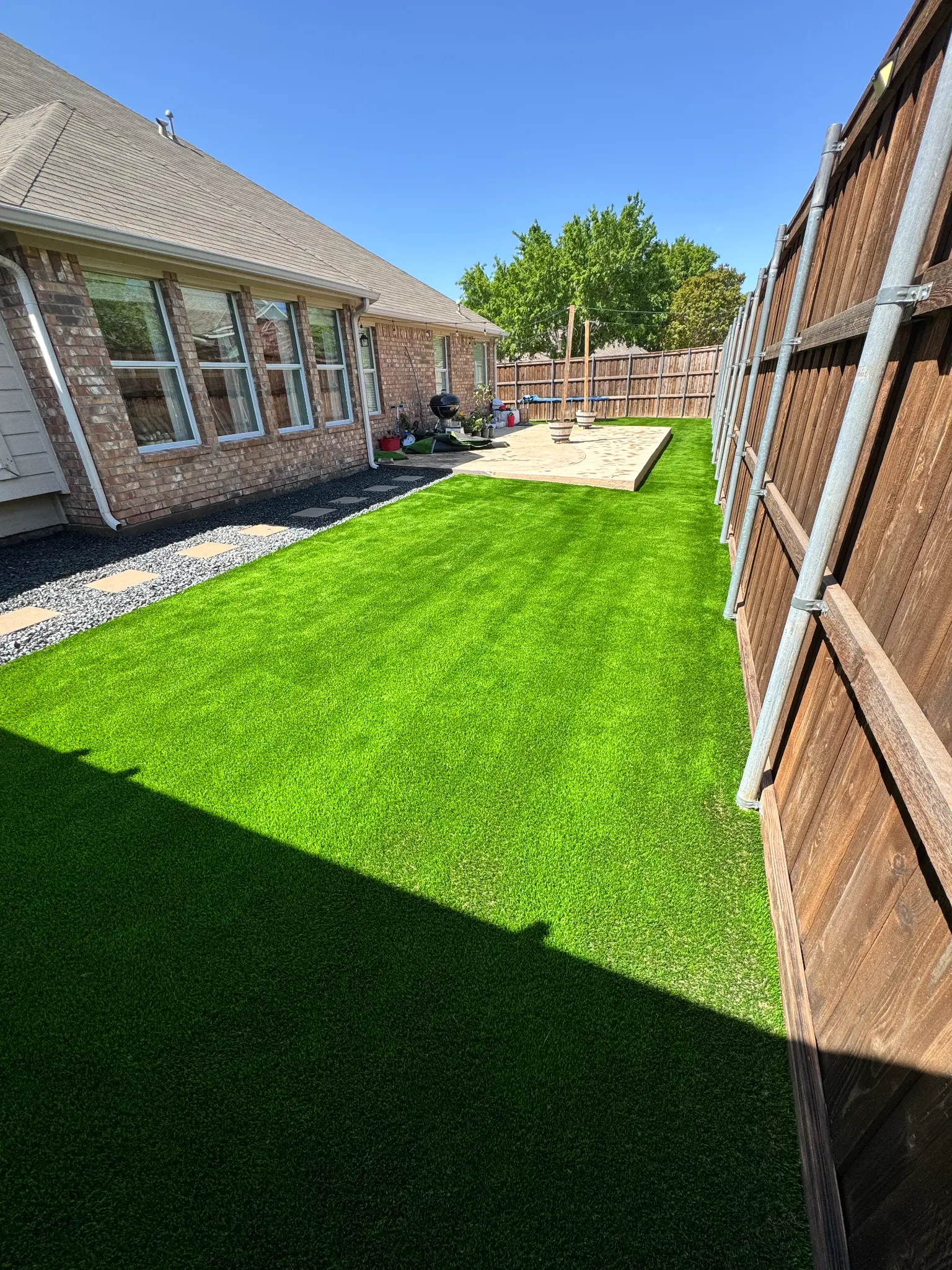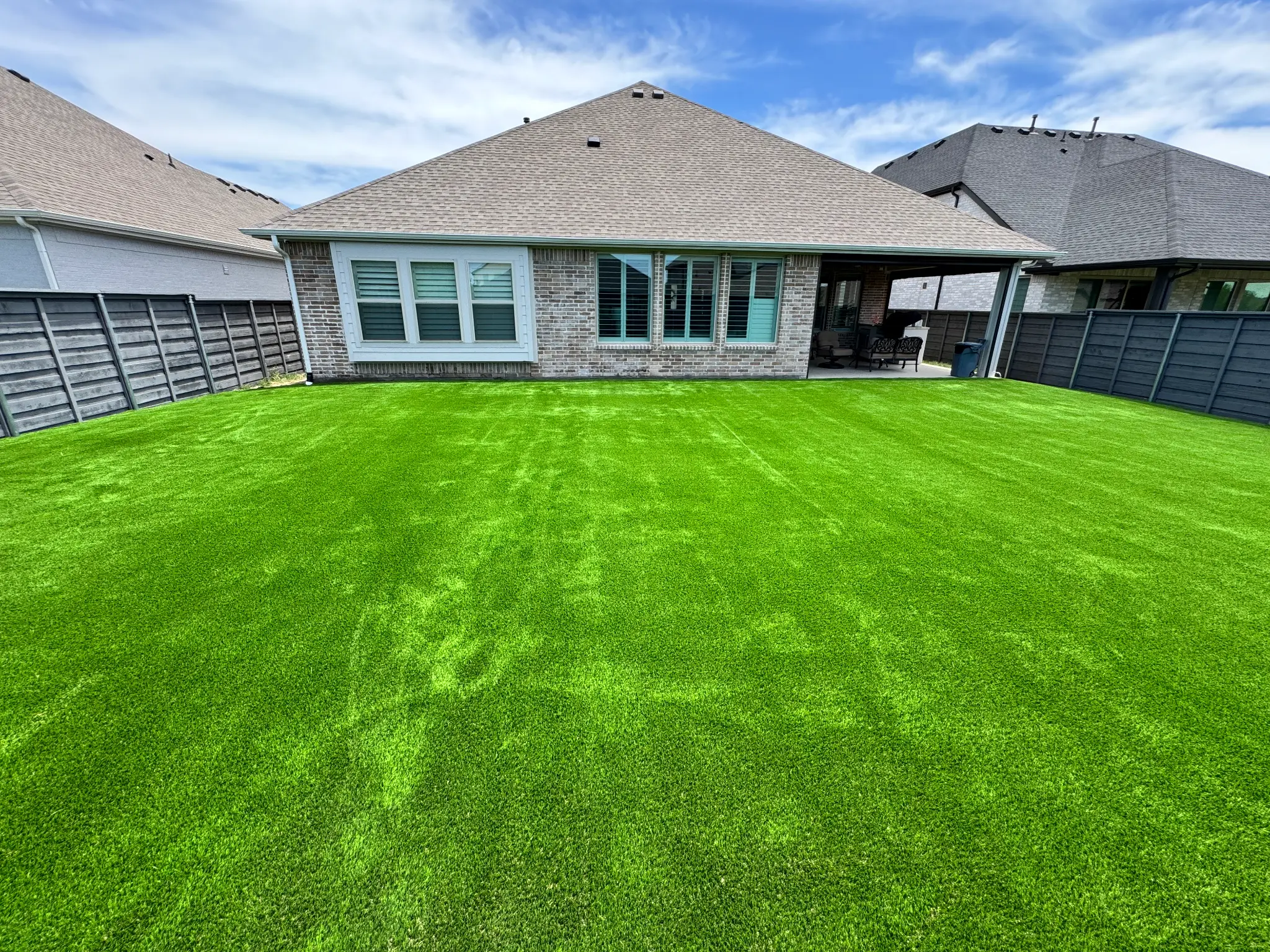
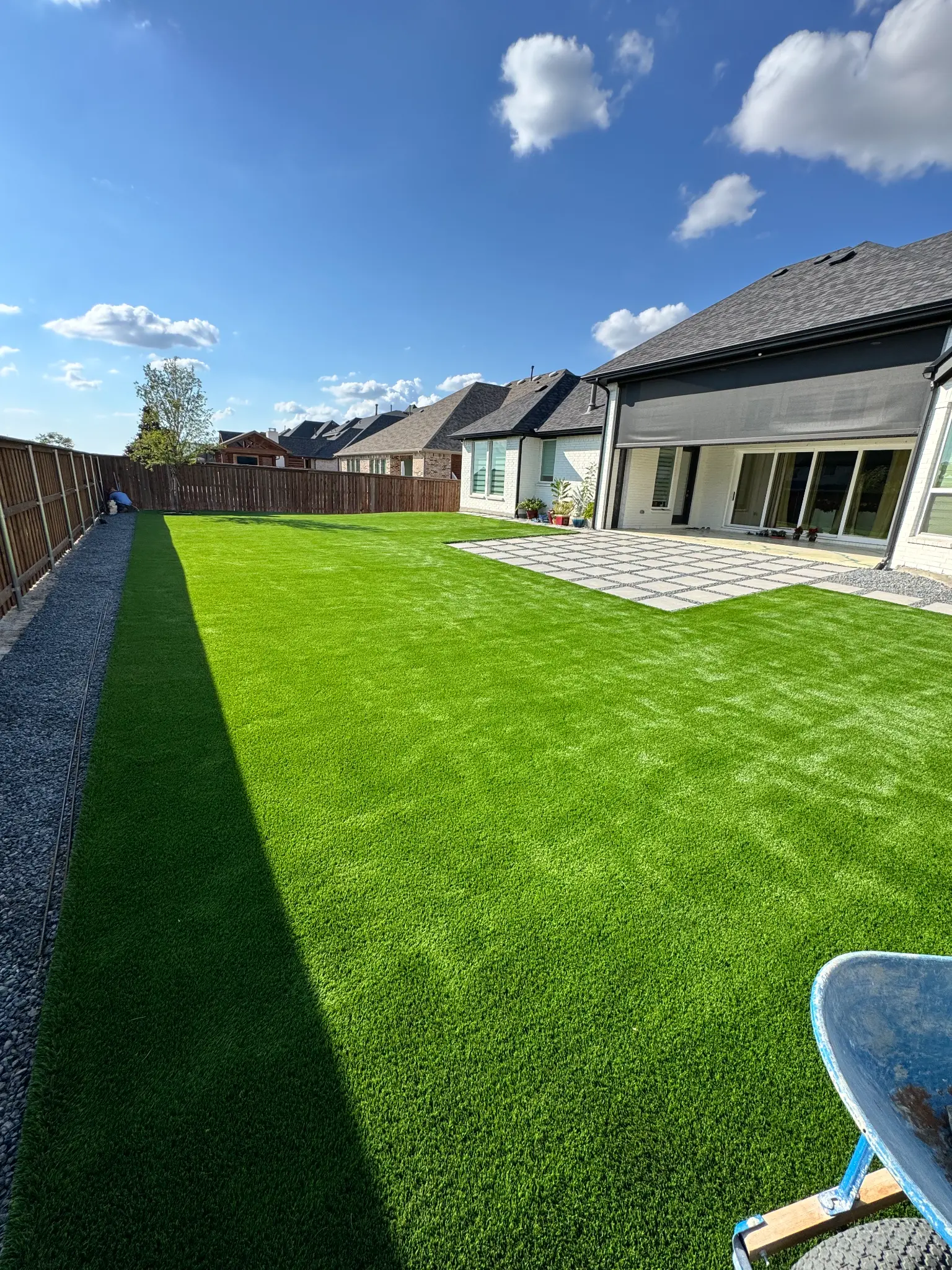
Why newer Prosper properties still need a site-specific scope
Prosper includes many newer planned communities, but lot age does not establish finished grade, compaction, drainage, utility depth, access, or association requirements. Expansive North Texas soil can change with moisture, and no contractor should predict an exact failure date from the neighborhood. Inspect the property and document the proposed assembly and water path.
Some important installation details disappear after the turf is placed, including subgrade preparation, base, compaction, drainage, seam work, and perimeter restraint. Compare those items in writing before comparing totals. A higher or lower price alone does not prove what is included or how a company will perform later.
The 10-point hiring checklist for Prosper homeowners
1. Relevant, verifiable project proof
Relevant photos and scope details can show how a contractor approaches transitions, edges, hardscape, and finish. References can help when customers have agreed to share them, but respect privacy and do not assume another lot matches yours. Current inspection and written scope still control the decision.
2. Base spec in writing — do not skip this
Emerald Green Turf normally plans around a 4-inch compacted decomposed-granite base where site conditions allow. The proposal should state excavation, material, planned depth, compaction, grade, drainage, and any exception required by the property. Do not assume original builder grading is right or wrong without inspection.
3. Insurance — emailed COI from the carrier
Ask for current evidence of the coverage a contractor states it carries, and read the named insured, dates, and policy details. Utility locating, excavation responsibility, and property protection should be discussed for the project. Direct coverage or liability questions to the insurer or a qualified adviser.
4. Two warranties — manufacturer and workmanship
Separate the manufacturer product warranty from any contractor workmanship terms. The turf products Emerald Green Turf uses carry 10–15 year manufacturer warranties, but coverage, exclusions, required care, and transfer rules vary. Read the actual documents and ask how a claim is started.
5. Cool-touch fibers, manufacturer data sheet attached
Artificial turf becomes hot in direct Texas sun. Ask for the exact manufacturer and product data, but do not treat a cool-touch label as a guaranteed temperature reduction. Shade, color, infill, air movement, moisture, time of day, and nearby masonry all affect the surface.
6. Pet infill specified by name and ounces
Pet areas need a site-specific drainage, cleaning, edge, and infill plan. Zeolite infill can help manage ammonia odor where appropriate, but it does not replace waste pickup and rinsing. Ask for the proposed product and quantity in writing with care guidance.
7. Owner on-site, crew that walked the yard
Ask who performs the site review, how observations reach the field team, who communicates changes, and who handles questions after completion. Emerald Green Turf is owner-led by Nick, but accountability and documented handoff—not one exclusive staffing model—are the defensible standard.
8. HOA paperwork handled up front
Many planned communities use an architectural or design review process, but rules and submittal requirements vary by association, phase, lot, and project location. Read the current governing documents and obtain the association's own checklist. Product sheets, color samples, photos, dimensions, drainage notes, and a site plan may help when requested.
9. Drainage engineered to a daylight point
Existing grade should be measured rather than assumed. Ask where water currently collects, how roof and neighboring runoff interact with the footprint, what finished grade is proposed, and where water can discharge without collecting at the home or creating another problem. The written scope should identify included drainage work and limitations.
10. Line-item contract — no vague phrasing
Ask for turf brand and product, infill, base material and planned depth, drainage, seams, edges, removals, restoration, warranty terms, exclusions, payments, and change-order rules. Clear written detail makes proposals comparable without assuming why another total is higher or lower.
Premium vs. cheap-quote: Prosper contract comparison
| Line item | Useful written detail | Question when detail is missing |
|---|---|---|
| Project proof | Relevant photos, scope, or approved references | What can be verified without invading privacy? |
| Subgrade | Observed conditions and planned preparation | What remains unknown before excavation? |
| Base | Material, depth, compaction, and site exceptions | What is included below the turf? |
| HOA | Owner responsibility and available submittal support | Which current documents control this lot? |
| Drainage | Existing conditions, proposed route, and limitations | Where does water go after it passes the surface? |
| Warranty | Manufacturer and workmanship terms separated | What is covered, excluded, and required? |
| Team | Named estimating, field, and follow-up contacts | Who owns the handoff and questions? |
| Contract | Line items, exclusions, payments, and changes | Which assumptions are not included? |
Prosper-specific questions homeowners ask us
Do Windsong / Light Farms allow turf?
Do not assume one answer applies across either community. Rules and submittal requirements can vary by association, phase, village, lot, and project location. Read the current governing documents, obtain the association's own checklist, and secure written approval when required before scheduling work.
How long does a Prosper backyard install take?
Many straightforward residential lawn projects are discussed in a two-to-three-day planning window, but size, access, demolition, drainage, weather, product, and combined hardscape can change the schedule. Ask for the sequence and expected duration after inspection.
How is a Prosper install quoted?
The proposal should reflect square footage, access, removal, grade, drainage, base, turf, infill, seams, edges, pet needs, restoration, warranty, and exclusions. Putting greens and hardscape receive their own scope rather than being assumed inside a lawn-turf rate.
My builder offered turf as an upgrade — should I take it?
Compare the builder option with an independent proposal before deciding. Ask both providers for the same details: demolition, base material and depth, compaction, drainage, turf product, infill, seams, edges, warranty terms, access assumptions, and who handles service after closing.
Get a free Prosper site walk
Request a free Prosper site review to discuss the yard, access, drainage, use, and current HOA or city requirements. Nick leads the estimate and project-planning conversation, and the proposal is written for the actual property.