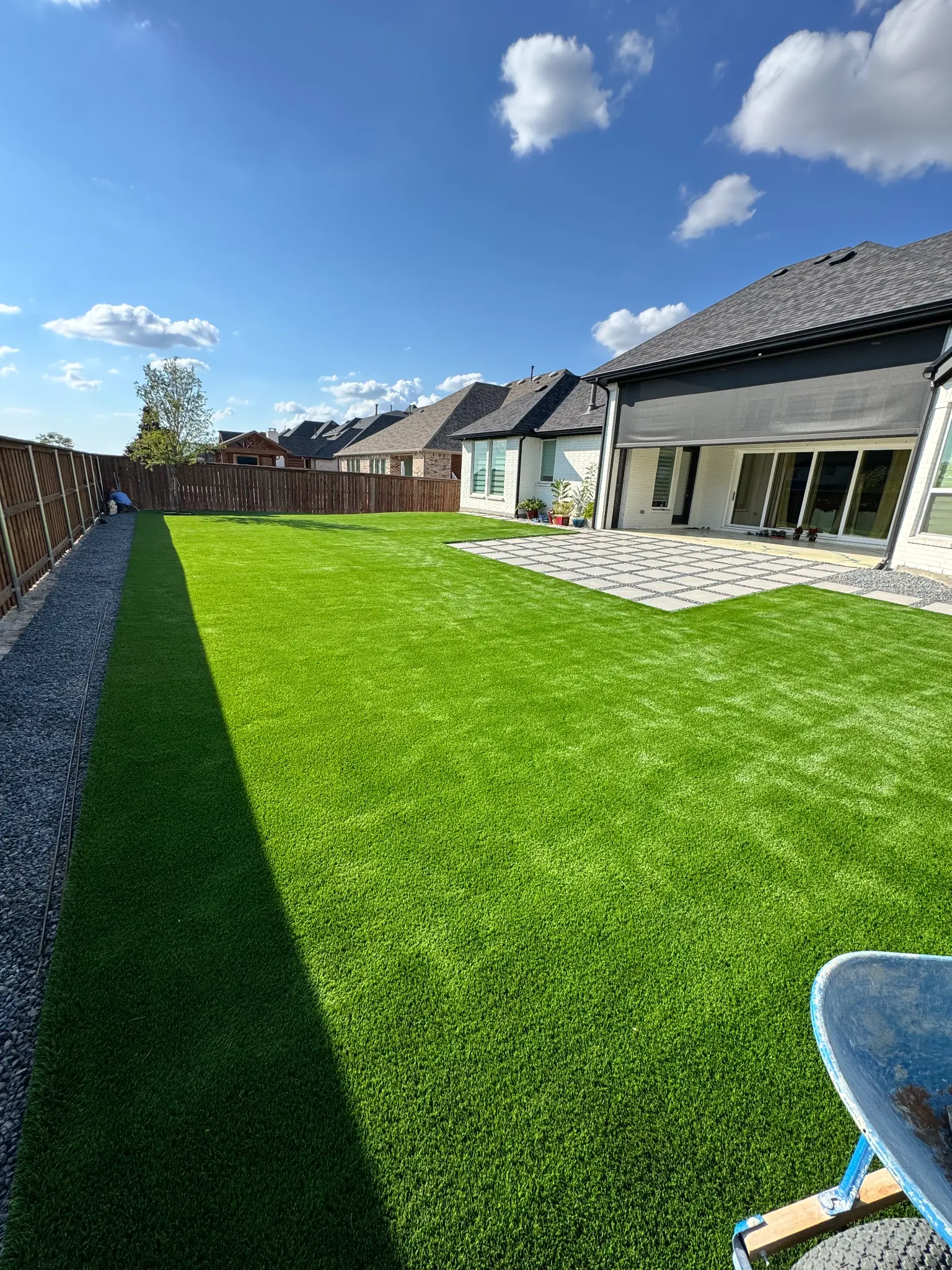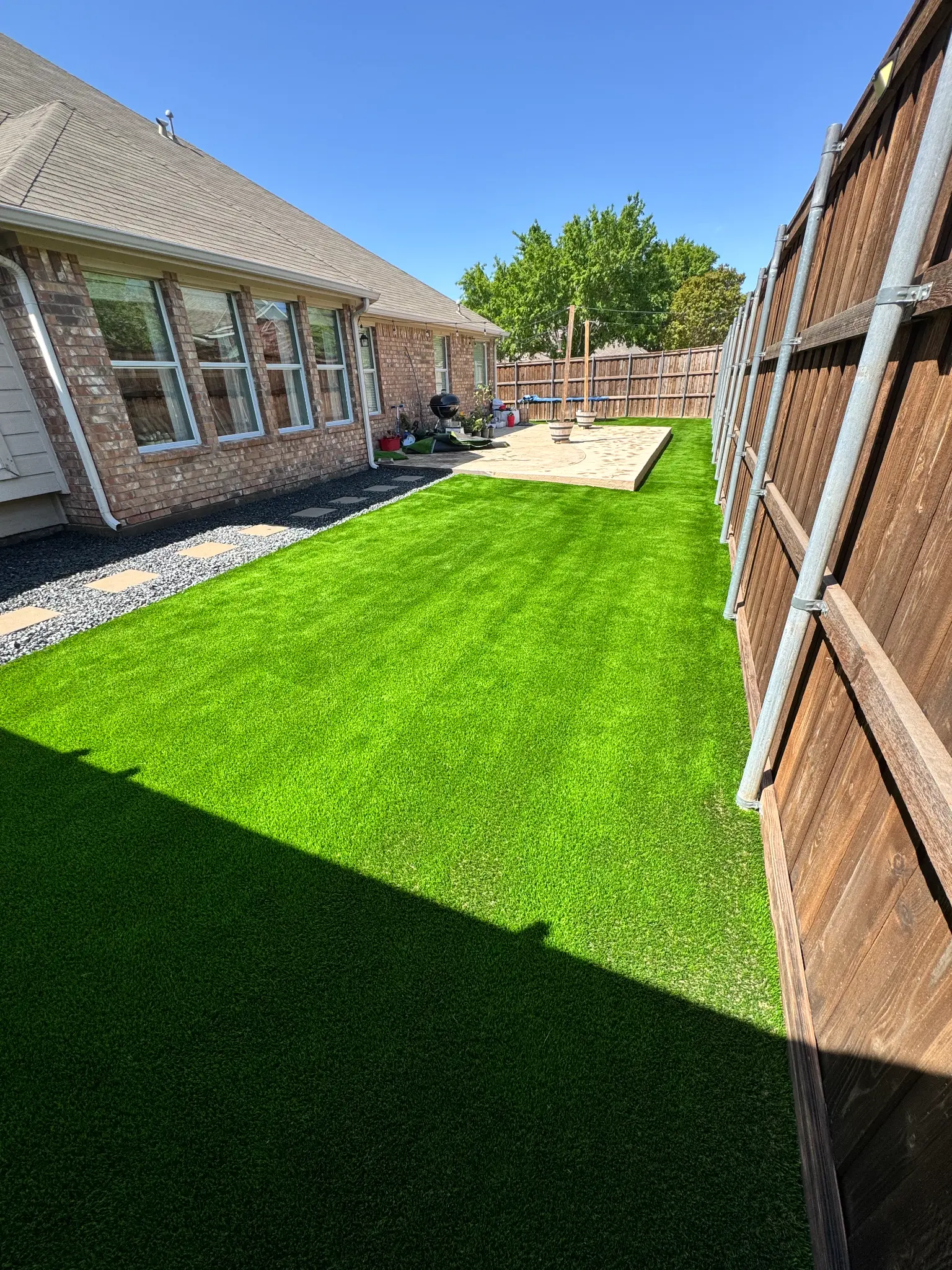
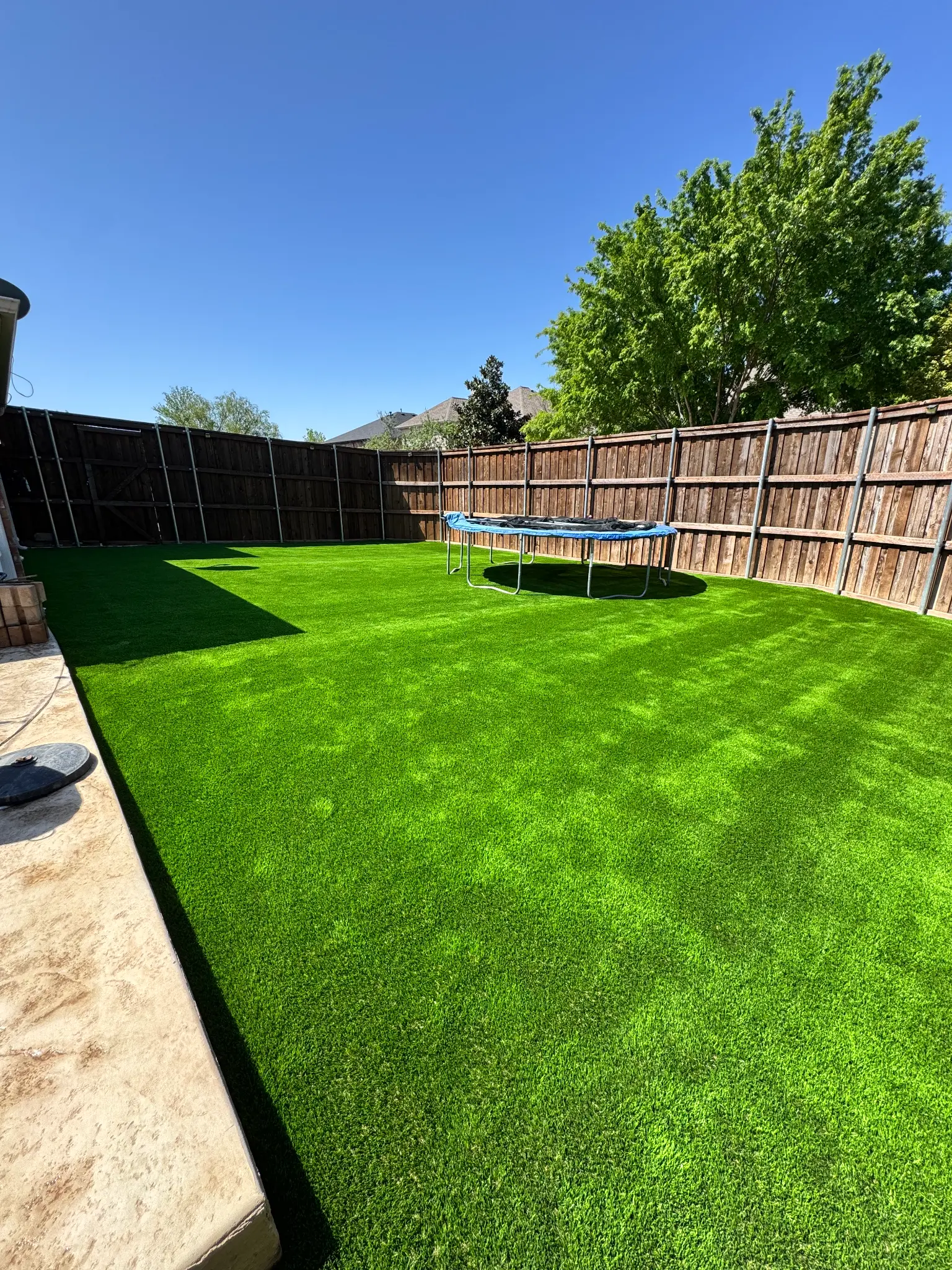
Why pet-turf systems need use-specific planning
Common pet-turf concerns include odor, slow drainage, and wear in high-traffic lanes. Causes can involve site drainage, base, product, infill, edges, dog count, waste pickup, rinsing, or maintenance. A pet system should be planned around use and cleaning—not appearance alone.
The four specs that make a pet system work
1. Pile height: 1.25"–1.5"
Pile height and fiber construction affect appearance, traffic response, brushing, and cleaning access. Active dog lanes often benefit from a shorter, resilient product, but the correct choice depends on the exact product, dog count, traffic, sun, and care routine. Compare samples and manufacturer data for the intended use.
2. Infill: pet-grade zeolite (not silica, not crumb rubber)
Zeolite is a mineral infill used in some pet systems to help manage ammonia odor. Product performance depends on the specified material, quantity, drainage, cleaning, and site conditions. Ask why an infill is proposed, review its manufacturer information, and do not treat any infill as a replacement for waste pickup and rinsing.
3. Drainage: perforated backing on 4" centers
Perforated or otherwise permeable backing allows liquid through the turf, but water and rinse flow still need a route through the base and away from the area. Compare the exact product's drainage information and ask how the subgrade, base, low points, existing drains, and discharge path work together.
4. Base: flushable, not asphalt-fines
The base should support the surface, manage water within the site plan, and remain compatible with the cleaning routine. Emerald Green Turf normally plans around a 4-inch compacted decomposed-granite base where conditions allow, then adjusts the written scope for grade, access, existing drainage, soil, and use.
Will it smell?
Any pet yard can develop odor when waste, drainage, residue, and cleaning are not managed. Pick up solid waste promptly, rinse based on use and weather, follow the product and infill instructions, and address a persistent drainage or odor source instead of masking it. Dog count and traffic change the cleaning frequency.
Is it safe on a hot day?
Artificial turf becomes hot in direct Texas sun. Shade, fiber color and construction, infill, air movement, moisture, time of day, and nearby masonry affect conditions. Test the surface before pet use, provide shade and water, follow veterinary guidance for heat-sensitive animals, and treat a brief rinse as temporary cooling rather than a guaranteed safe interval.
Common pet-yard setups
| Setup | Typical size | What the design focuses on |
|---|---|---|
| Side-yard dog run, 1 large dog | ~300 sq ft | Drainage and odor control in a narrow space |
| Backyard sprint lane + lounging zone, 2 dogs | ~900 sq ft | Durable high-traffic lane + shaded rest area |
| Multi-dog household yard, 3+ dogs | ~1,400 sq ft | Heavy-duty infill spec and full-yard drainage |
What about kids playing on it?
A shared play area should be evaluated for the exact turf, infill, edges, drainage, surface temperature, fall expectations, cleaning products, traffic, and manufacturer guidance. Pet-grade is not a universal child-safety certification. Discuss the intended users during the site review and obtain qualified guidance when the use requires it.
Questions we resolve before specifying a pet yard
- Does the pile and fiber construction fit the traffic pattern?
- What infill is proposed, why, and in what quantity?
- How does liquid pass through the backing and base?
- Where do rain and rinse water leave the area?
- What do the product warranty and care instructions actually require?
Talk to us
Call (661) 733-7009 or request a free onsite quote. Nick will ask about dog count, traffic, cleanup, shade, access, drainage, and the people using the yard, then prepare a property-specific written proposal.