How to think about size
The right green supports the shots you actually practice. A player focused on longer putts may value uninterrupted roll, while short-putt practice may benefit from useful cup positions and break variety. During design, discuss your goals, chipping interest, household use, available space, and surrounding obstacles.
- What is your current handicap, and what shot do you most want to improve?
- Are you adding a chipping fringe, or is this putting only?
- Will kids and dogs be on it?
Three benchmark builds
The Compact: 250–350 sq ft, 3 cups
A compact footprint can support focused short-putt practice when cup placement and contour are planned together. Confirm clear stance areas, safe misses, surrounding furniture, drainage, and transitions before deciding how many cups fit.
The Practice Standard: 400–600 sq ft, 4–5 cups
A mid-size concept may create longer practice lines, multiple breaks, and an optional fringe when the yard supports them. The available shape, safe chipping direction, access, drainage, and remaining outdoor uses determine whether this benchmark fits.
The Tournament: 800–1,400 sq ft, 6+ cups, contoured
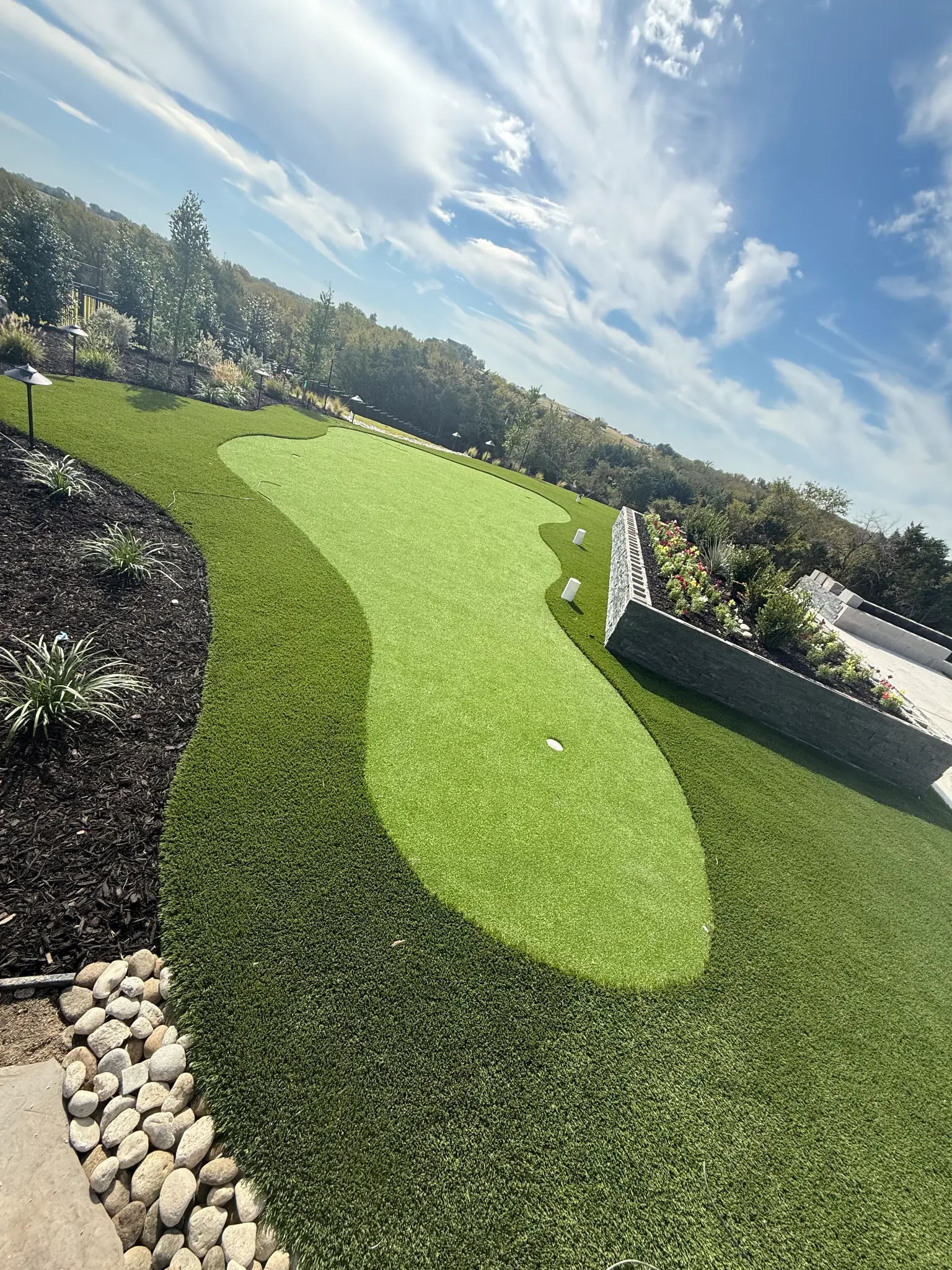
A larger concept can include more cup positions, longer rolls, fringe, or other short-game features. It also increases excavation, base shaping, drainage, access, transition, and maintenance considerations. City or neighborhood does not determine whether the design fits.
Cup count and break design
More cups are not automatically better. Each location needs useful approach and recovery lines, enough surrounding surface, and a relationship to the contours. Cup count should follow the drawing and practice goals rather than a universal square-foot formula.
Stimp speed and roll consistency
Stimp readings describe putting-surface speed under a particular test. Backyard roll depends on the selected surface, base finish, contour, infill or sand, grain, weather, care, and measurement method. Discuss the feel and practice goal, review the proposed product, and avoid a guaranteed speed claim that ignores site and maintenance conditions.
Contour and elevation
Contour should create useful variety without turning every putt into the same exaggerated break. Elevation change depends on green dimensions, cups, surrounding grade, drainage, and player goals. Review the proposed layout and major breaks before excavation and again before the surface is finalized.
Where putting greens shine in DFW
Putting greens can fit properties across DFW when the available footprint, access, drainage, surrounding use, and practice goals align. Do not infer a homeowner's budget or the right green size from a city. A site walk and layout discussion determine whether a compact or larger concept makes sense.
Maintenance reality check
Synthetic putting greens avoid mowing like natural putting surfaces, but they still need debris removal, brushing, cup care, drainage checks, and product-specific infill or sand maintenance. Frequency depends on trees, traffic, pets, weather, and the selected system. Follow the handoff and manufacturer guidance rather than one universal schedule.
Designing yours
Request a free onsite quote to discuss footprint, cups, contours, fringe, drainage, access, surrounding surfaces, and practice goals. The written scope will explain the proposed design process and included deliverables. Call (661) 733-7009 or start online.